 Cesar
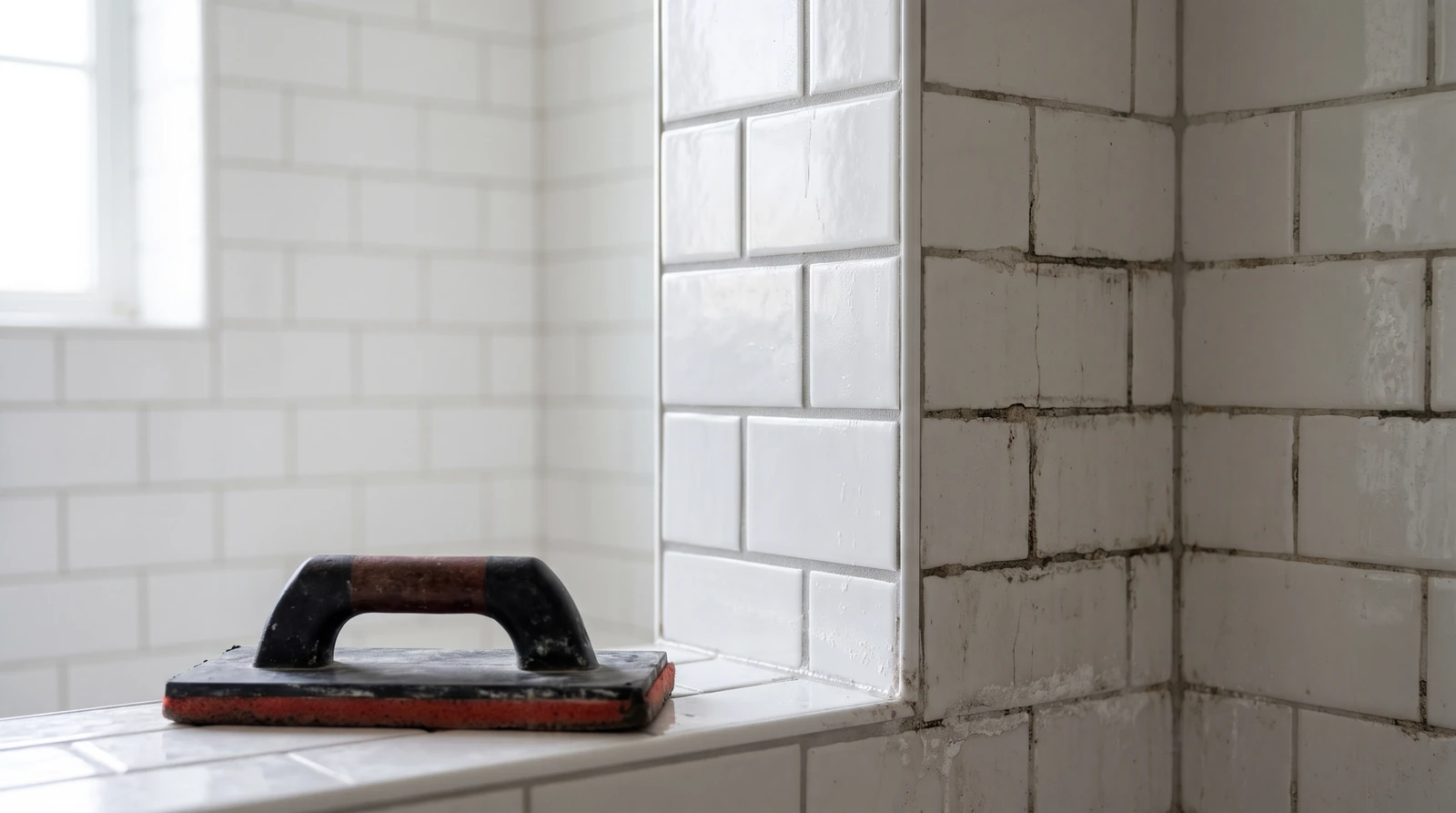
How do I know if my shower grout has failed?
Grout has failed when it cracks, crumbles, or falls out in places, or when dark stains and mildew return soon after cleaning. Grout lines are the first defense against water getting behind tile, so any gap that lets water through is worth fixing promptly, even if the tile itself still looks sound.
Not every dark line is a failure. Soap film and surface dirt come off with a gentle scrub, and that scrub tells you which problem you have. Grout that stays stained after a thorough cleaning, or that has gone soft, powdery or sandy, has usually absorbed moisture and is wearing out.
- Hairline cracks along grout lines or at corners
- Missing grout, or gaps deep enough to catch a fingernail
- Dark stains that come back soon after cleaning
- Mildew that returns in the same joints
- Grout that crumbles or feels powdery when pressed
How does Southern California hard water affect grout and tile?
Hard water carries dissolved minerals that dry into a white, chalky crust on tile, glass and grout. Over time that scale roughens grout surfaces, which then hold onto soap and dirt, and it can dull glazed tile. Gentle, regular cleaning keeps buildup from hardening, while harsh scraping can scratch tile and wear grout away.
Much of the San Gabriel Valley has hard water, so a white film on shower walls and glass is common. Wiping or squeegeeing the walls after a shower keeps minerals from drying in place. For buildup that has already formed, a gentle approach protects both the tile and the grout.
- Wet the wall with warm water.
- Apply a cleaner made for soap scum and hard water that is safe for your tile type, and read the label first.
- Let it sit for the time the label gives, without letting it dry.
- Scrub with a soft nylon brush, never steel wool or a metal scraper.
- Rinse thoroughly, then squeegee or wipe dry.
Be careful with acidic cleaners, including vinegar. They can etch natural stone such as marble or travertine, and frequent use can wear at cement grout. Never mix cleaning products. If scale keeps returning, a water softener or a showerhead filter can reduce it at the source.
When is regrouting enough, and when do I need to retile?
Regrouting is usually enough when the tiles are solid and tight, and only the grout is cracked, stained or missing. Retiling is the better call when tiles are loose, crack, or sound hollow when tapped, or when the wall behind feels soft or damaged, because new grout cannot fix a failing base.
A simple check is the tap test. Tap each tile lightly with a knuckle or the handle of a screwdriver. Solid tile gives a firm, dull sound, while a hollow or drummy sound means the bond underneath has let go. Also press on the wall near the tub and the shower floor. It should feel firm, not spongy.
| What you see | What it usually means | Likely fix |
|---|---|---|
| Cracked, stained or missing grout, tiles tight | The grout has worn out | Regrout |
| One loose or hollow-sounding tile | The bond failed in one spot | Reset or replace that tile after checking behind it |
| Several hollow or cracked tiles | A wider bond or movement problem | Retile the affected area |
| Soft, spongy or crumbling wall | Water has reached the backing | Open the wall, repair the backing, then retile |
| Grout cracking again in the same place | Movement at that spot | Find the cause, often a joint that needs flexible sealant |
Backing that has stayed wet for a long time can soften and crumble, and that section has to be opened, repaired and retiled. That kind of repair is part of our tile installation work, and our post on bathroom remodel planning helps if you are weighing a larger update.
Should corners and edges use caulk or grout?
Use flexible caulk or sealant, not grout, wherever two surfaces meet at an angle or different materials join: inside corners, where the wall meets the tub or shower pan, and around fixtures. Those joints move slightly, and rigid grout cracks there. Grout fills the flat joints between tiles.
A very common reason grout keeps cracking is that it was used in a corner. Walls, tubs and pans expand, contract and settle at slightly different rates, and a flexible joint absorbs that movement where grout cannot. These are called change-of-plane joints, and they should get a sealant made for bathrooms.
When this sealant turns dark, peels or pulls away, remove it completely rather than laying new material over it. The joint should be clean and dry before the new bead goes in, otherwise the replacement will not bond well.
Do I need to seal grout, and what should I watch for afterward?
Cement-based grout is porous, so it is commonly sealed after it cures to slow stains and moisture absorption, and resealed periodically. Epoxy grout is a less porous option some homeowners choose. Afterward, watch for water stains, soft paint or bubbling on drywall outside the shower, which signal that moisture is escaping.
To check an older sealed shower, put a few drops of water on the grout. If it beads up, the sealer is still working. If the grout darkens and soaks it in, it is due for sealing. Always follow the grout and sealer instructions for cure times before the shower gets wet. Epoxy grout generally does not need sealing, but it is harder to install and works best in the hands of someone who has used it before.
- Stains or discoloration on the wall or ceiling on the other side of the shower
- Paint that bubbles, peels or feels soft
- A musty smell in the adjoining room
- Swollen baseboards near the shower wall
- Tiles that start to loosen again
Drywall that has been wet needs to dry out and the source needs to be found before anything is patched. Our post on drywall patch or replace explains the difference, and we handle drywall repair once the cause is fixed.
With more than 18 years in the trades, we look at the whole picture, not just the grout line. We work with homeowners in Arcadia, Monrovia and nearby cities, and estimates are free. Call (909) 775-1885 any day between 8 AM and 8 PM.
For a free look at your own shower, call Cesar & Cesar, a family-owned handyman business serving Pasadena and the San Gabriel Valley.
Related services
Serving Arcadia and Monrovia, and the wider San Gabriel Valley and Inland Empire.
More guides
- Kitchen Refresh or Full Remodel? How to Decide What Your Kitchen NeedsA refresh fixes surfaces and fixtures; a remodel changes layout and structure. Here is how to tell which problem you actually have.
- Bathroom Remodel Planning: 5 Questions to Answer Before You StartLayout, waterproofing, ventilation, timeline and surprises behind the walls: the planning questions that shape a bathroom remodel.
- Grab Bars and Small Home Upgrades for Aging in PlaceWhere grab bars go, why they must be anchored into framing or blocking, and which other small upgrades make a home easier to use.
Frequently asked questions
Can new grout go right over the old grout?
No. Old grout has to be removed to a good depth first so the new grout can bond and fill the joint. Spreading it over the surface leaves a thin layer that cracks and falls out.
How long before I can use the shower after regrouting?
It depends on the product. Cement grout generally needs to cure for a day or more before it gets wet, and sealer has its own wait. Check the instructions for the exact product used.
Does mildew in the grout mean I have a leak?
Not necessarily. Showers are damp, and mildew grows easily on soap film. Mildew together with a soft wall, loose tiles or stains outside the shower suggests water is getting through.
Is the white crust on my shower tile permanent?
Light scale usually cleans off with a suitable product and a soft brush. Scale left for a long time can leave dull marks that cleaning does not remove.
Can a few loose tiles be fixed without redoing the whole shower?
Sometimes. If the problem is isolated and the backing is sound, individual tiles can be reset or replaced. A cluster of loose tiles or a soft wall points to a bigger problem, and we can look at it during a free estimate.
Have a question about your own home? Estimates are free.