 Cesar
How long does exterior paint last in Southern California?
It varies widely. Quality exterior paint on well-prepared surfaces often lasts several years, and longer on shaded walls. Strong sun, the surface type, the color, the paint quality and, above all, the preparation all change the result. Sun-facing walls and horizontal surfaces such as sills and rails usually wear out first.
A typical house does not age evenly. The walls that face south and west take the most direct sun, and trim, fascia and window sills take more punishment than flat walls. It is normal for part of a house to need attention years before the rest.
Rather than counting years, look at the paint itself. The signs below are a better guide than a calendar.
What are the signs that exterior paint needs to be redone?
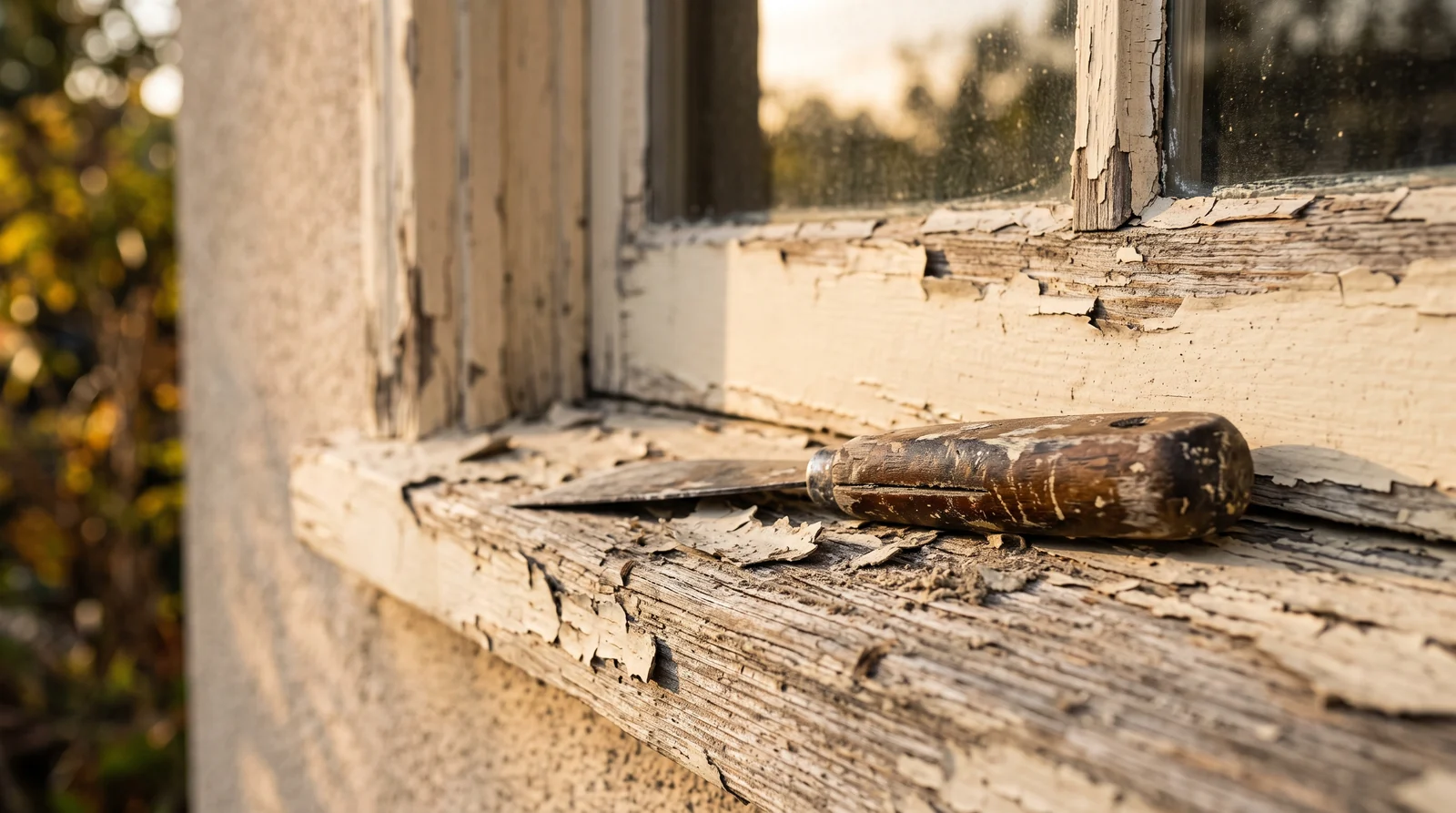
Look for chalking, where paint leaves a powder on your hand, along with fading, cracking, peeling, blistering, bare wood, and caulk that has shrunk or split. Hairline cracks in painted stucco and dull, rough patches on sun-facing walls also mean the coating is wearing thin and no longer protecting what is underneath.
| What you see | What it means | What to do |
|---|---|---|
| Powdery residue when you rub the wall | Chalking: the binder is breaking down in the sun | Plan to repaint; wash and prime as needed |
| Color is noticeably faded or uneven | UV wear, worst on sun-facing walls | Repaint, starting with the worst walls |
| Cracking or flaking paint | Paint has lost adhesion or flexibility | Scrape, prep and repaint; do not paint over loose paint |
| Bare, gray wood on trim or fascia | Protection is gone | Prime and repaint soon, before rot starts |
| Caulk is split or shrunken at joints | Gaps let water in | Re-caulk before painting |
| Hairline cracks in painted stucco | Coating is wearing thin or the stucco is moving | Seal cracks, then repaint |
The rub test is easy. Wipe the wall with your palm. If a chalky film comes off on your hand, the paint is wearing out even if the color still looks fine.
Does paint color affect how long it lasts in the sun?
Yes, to a degree. Dark colors absorb more heat and fade more visibly in strong sun, while lighter colors reflect more heat and tend to show fading less. Quality of the paint and surface preparation matter more than color, but if sun exposure is intense, color choice is worth discussing before you commit.
Dark colors on a wall that sits in full afternoon sun get hot, which stresses the paint and the surface. That does not mean dark colors are off the table. It means they are a place where quality paint and proper prep matter even more.
A paint sample on the actual wall, viewed at different times of day, tells you far more than a chip in a store. We can help you test before the full job.
What makes an exterior paint job last longer?
Preparation matters most. A lasting job means washing the surface, scraping loose paint, repairing cracks and rot, sealing gaps with fresh caulk, priming bare spots and applying quality paint in suitable weather. Painting over dirt, loose paint or damaged surfaces is the most common reason a new coat fails early.
- Wash the surface so paint can bond to it, and let it dry fully.
- Scrape and sand loose or peeling paint back to a sound edge.
- Repair rot, cracks and holes, and re-caulk gaps and joints.
- Prime bare wood, patches and stains.
- Paint in suitable weather, avoiding hot direct sun and strong wind, following the label's temperature range.
On older homes, paint applied before 1978 may contain lead. If you are scraping or sanding old paint, take precautions and ask a qualified specialist about testing and safe work practices first.
When is the best time to paint the outside of a house?
Choose mild, dry days with moderate temperatures and little wind, which in Southern California often means spring and fall. Painting in extreme heat makes paint dry too fast, and painting before rain or heavy dew can ruin the finish. Product labels list the right temperature range, and good timing is part of the job.
Heat is a bigger issue here than cold. Paint applied to a hot wall can dry before it levels or bonds properly, leaving marks and weak adhesion. Wind blows dust into wet paint. We plan around the sun, working on shaded walls first when we need to.
We provide exterior and interior painting, and we can pair it with stucco repair and fence and gate repair so surfaces are fixed before they are painted. Estimates are free.
If your walls are stucco, read when stucco cracks are worth worrying about before you repaint, because cracks should be dealt with first. Cesar & Cesar, a family-owned handyman business serving Pasadena and the San Gabriel Valley gives free estimates for exterior painting.
Related services
Serving Rancho Cucamonga and Arcadia, and the wider San Gabriel Valley and Inland Empire.
More guides
- Getting Your Home Ready for the Rainy Season in Southern CaliforniaLong dry months open gaps in caulk, stucco and door seals. Here is what to check before the first storm and what to look for after it.
- Kitchen Refresh or Full Remodel? How to Decide What Your Kitchen NeedsA refresh fixes surfaces and fixtures; a remodel changes layout and structure. Here is how to tell which problem you actually have.
- Getting Your Fence and Gate Ready for Santa Ana Wind SeasonA pre-season check of posts, fasteners, hinges and latches, plus how to tell a quick fix from a repair that should not wait.
Frequently asked questions
Can I paint over peeling paint?
No. New paint will not hold on top of loose paint and will peel with it. The loose material needs to be scraped or sanded back to a sound edge, and the surface primed, before it is repainted.
Do I need to pressure wash before painting?
The surface needs to be clean, and washing is the usual way to do it. How it is washed and how long it dries matter, because forcing water behind siding or into cracks can cause problems.
Should I repaint just the sun-facing side?
You can, but the new paint may not match the aged paint on the other sides. Many people repaint the worst wall first and plan the rest later, or paint the whole house for an even look.
Does stucco need to be painted?
Some stucco is integrally colored and others are painted. Painted stucco needs a suitable coating, and cracks should be sealed first. Cesar can tell you what he sees at the free estimate.
How long does an exterior painting job take?
It depends on the size of the house and the prep needed. Prep, repairs and drying time between steps take longer than the painting itself, and weather can shift the schedule. We give a realistic timeline at the estimate.
Have a question about your own home? Estimates are free.