 Cesar
Should I repair my concrete or replace it?
Repair works for hairline cracks, small chips, surface scaling and minor settling. Replacement is usually better when the slab is heavily cracked, has sunk or heaved, has crumbled through its depth, or has drainage problems underneath. Cesar looks at why the concrete failed, since replacing it without fixing the cause repeats the problem.
| What we see | Usual approach | Why |
|---|---|---|
| Hairline cracks | Clean and seal or fill | Keeps water out, usually cosmetic |
| Wider, active cracks | Fill with flexible material or cut out the section | Rigid patches re-crack when the slab moves |
| Surface flaking or scaling | Resurface or patch | Damage is only in the top layer |
| Sunken or tilted slab | Re-level if appropriate, or replace the section | Soil underneath has settled or washed out |
| Crumbling or broken throughout | Break out and pour new | Repair will not hold on failed material |
A crack that is wider on one side than the other, or one slab sitting higher than its neighbor, points to movement underneath. We will tell you what we think is happening before we recommend a fix.
Why does concrete crack, even when it was poured correctly?
Concrete shrinks as it cures and expands and contracts with temperature, so some cracking is normal. Cracks also come from poor base preparation, tree roots, water washing out soil underneath, heavy loads, and missing control joints. Joints are cut or formed to let the slab crack in straight lines where you want it to.
Control joints are planned weak spots. Without them, concrete finds its own place to crack. Walkways and small slabs should have joints spaced to suit the thickness and size of the pour.
- Shrinkage during curing: normal, and why control joints exist
- Poorly compacted or uneven base: the slab sinks unevenly and cracks
- Water: washes out soil, and freezing is rare here but irrigation soaks the ground just the same
- Roots: lift and crack walkways beside trees
- Too much water in the mix or poor curing: weaker surface that scales and flakes
What goes into pouring a new walkway, steps or small slab?
A good pour starts with removing the old material, excavating to the right depth, compacting the base, setting forms to the correct slope, and adding reinforcement where needed. Then comes the pour, screeding, finishing and curing. The base and forms take more time than the pour itself.
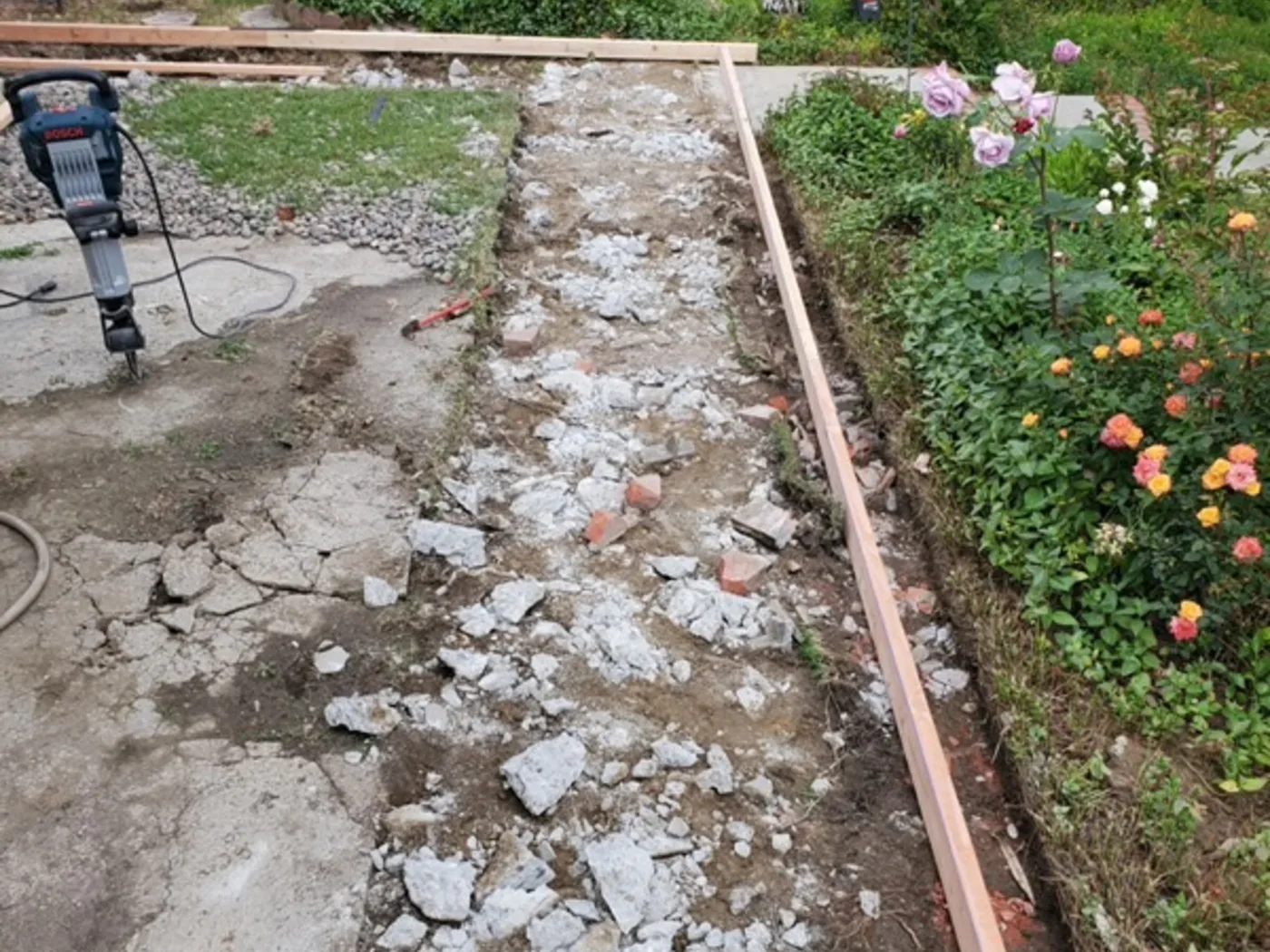
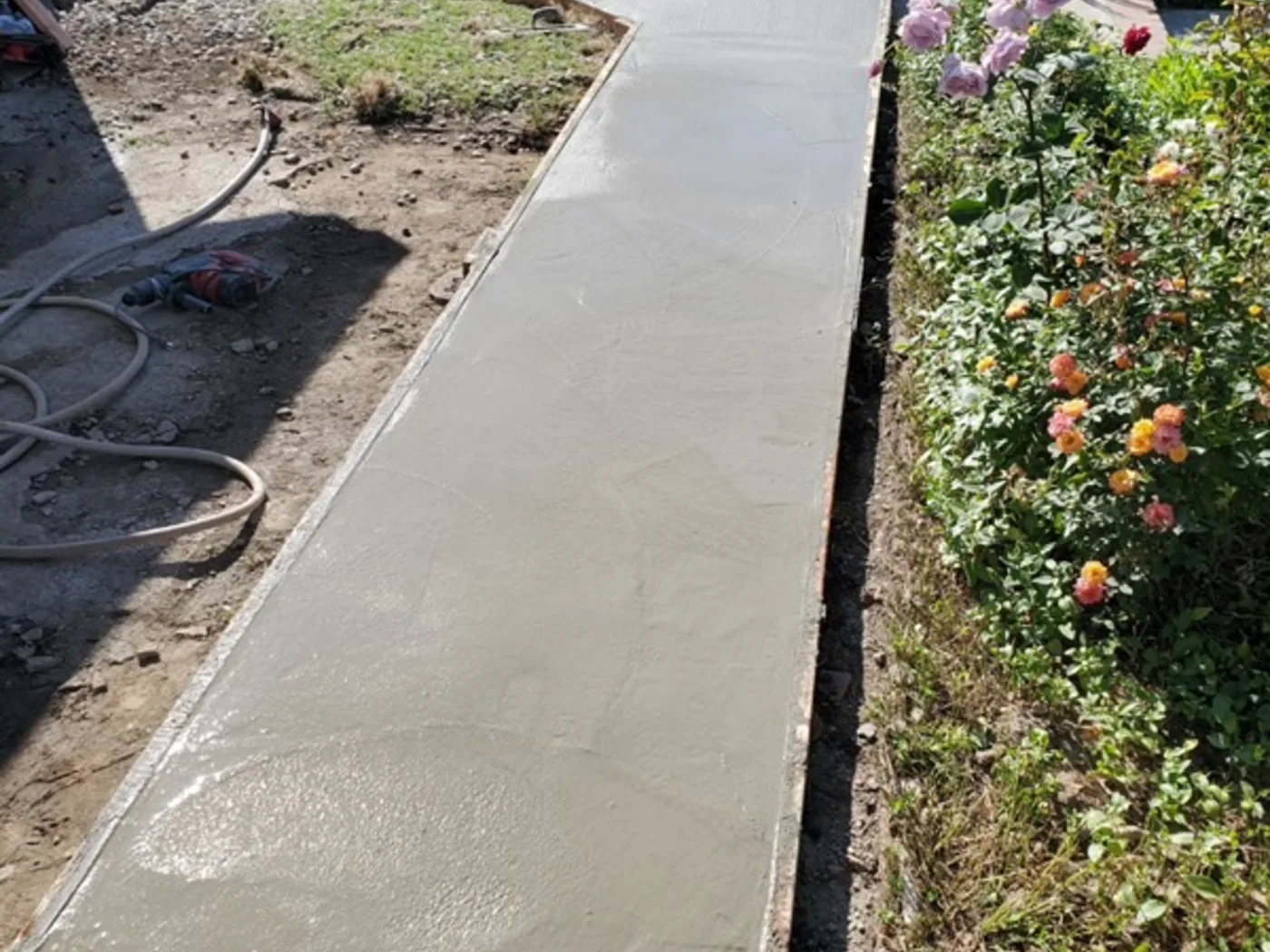
The photos above show two stages: the old walkway broken out to bare soil, and the finished pour. What happens in between is what keeps it flat and crack-resistant.
- Break out and haul away the old concrete, and remove roots or soft soil as needed.
- Excavate to depth and compact a stable base so the slab has even support.
- Set wood forms to the right height and slope so water drains away from the house.
- Place reinforcement where the job calls for it, such as wire mesh or rebar.
- Pour, screed level, float and finish the surface to the texture you want, such as a broom finish for traction.
- Cut or form control joints, and cure the concrete slowly by keeping it damp and protected.
Slope matters as much as strength. A walkway or patio that drains toward the house, or holds a puddle in the middle, will cause trouble even if the concrete itself is fine.
How long does concrete take to cure, and when can I walk on it?
Fresh concrete can usually take light foot traffic after about one to two days, depending on weather, but it keeps gaining strength for weeks. Full strength is typically reached around 28 days. Vehicles and heavy loads should wait longer. Cesar tells you exactly when each use is safe for your job.
Heat and wind make concrete dry faster at the surface, which can lead to cracking if it is not kept moist. Cooler, calm weather is easier on a new pour. We plan around the weather and cure the slab carefully.
Keep pets, children and wheelbarrows off the surface until we say it is ready. Footprints and paw prints in fresh concrete are permanent.
Can concrete steps and stairs be rebuilt?
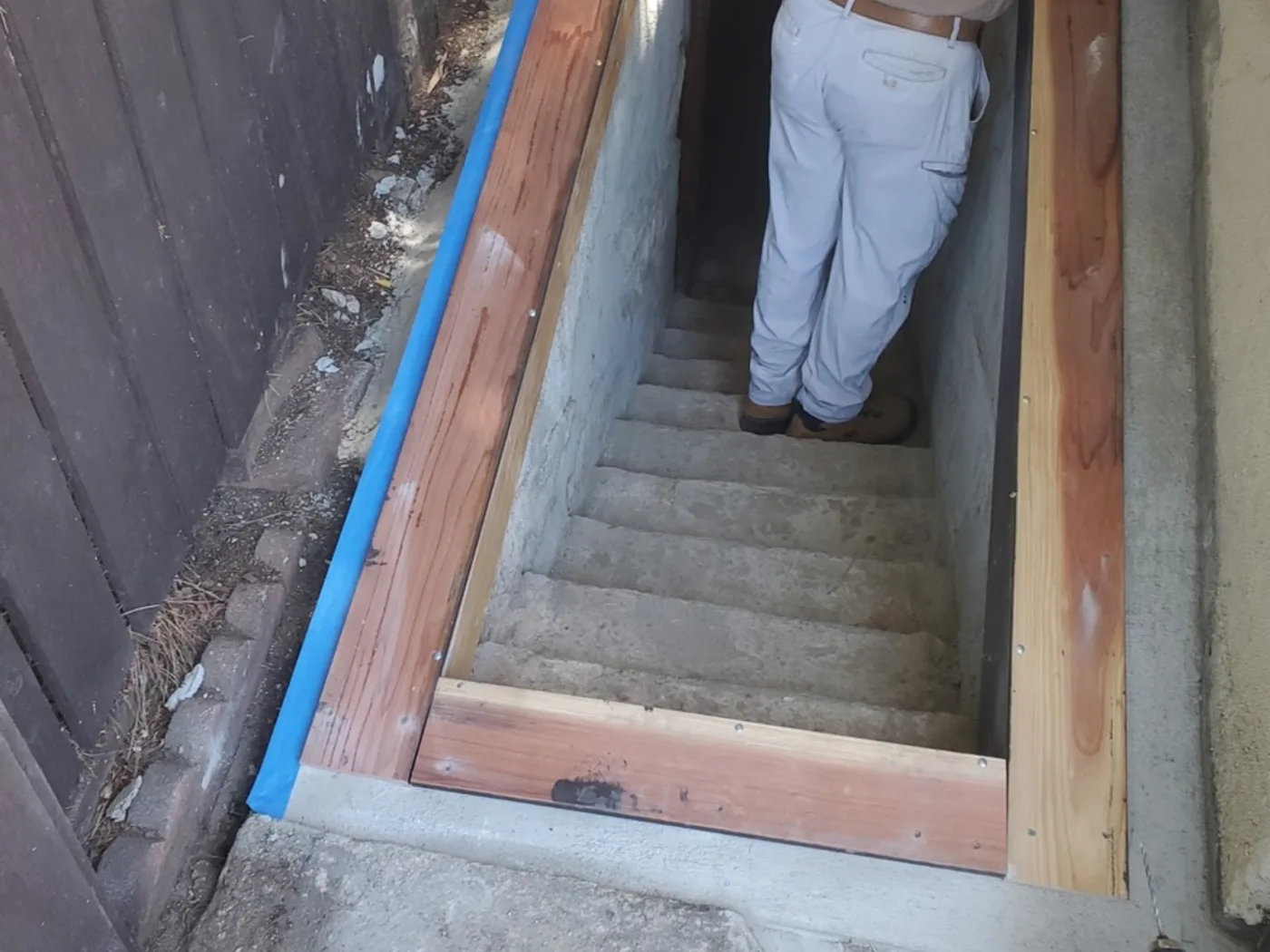
Yes. Crumbling or sunken steps can be broken out and rebuilt with new forms, reinforcement and fresh concrete, as in the basement stairway photo above. Steps must have even risers and treads to be safe. If the work involves handrails, retaining walls or structural elements, Cesar will say up front what it requires.
Stairs are a safety item. Uneven step heights are a common cause of trips, so layout matters more than appearance. Exterior steps also need good drainage so water does not sit on the treads.
Some stair and wall projects involve structural requirements or approvals from your city. Cesar will go over what applies to your job at the estimate rather than guess.
What should I do before the concrete crew arrives?
Clear the work area of furniture, planters and vehicles, mark sprinkler lines and anything buried, and tell us where gates and access points are. Move vehicles off the driveway. Photograph the problem area, and plan where people and pets will walk while the new concrete cures.
- Move planters, furniture and vehicles away from the work zone
- Mark sprinkler heads, drip lines and any known buried utilities
- Make sure we have a clear path to the work area for materials and tools
- Decide on the finish you prefer, such as a broom or a smoother finish
- Plan a temporary route around the new concrete while it cures
What is and is not included
Included
- Inspection of the concrete and an explanation of why it failed
- Crack filling, patching and surface repair
- Demolition and haul-away of old concrete
- Base preparation, forming, pouring, finishing and curing of new walkways, steps and small slabs
- Control joints, drainage slope and cleanup of the work area
Not included
- Large driveways, foundations and structural slabs, which Cesar scopes at the estimate and tells you up front what they involve
- Retaining walls, which are separate projects
- Tree removal and major root work
- Plumbing or irrigation line repairs found under the slab, which belong to the relevant trade
Where we offer concrete repair & new pours
We provide concrete repair & new pours across the San Gabriel Valley and the Inland Empire. Pick your city for local details:
Related handyman services
Related guides
- Getting Your Fence and Gate Ready for Santa Ana Wind SeasonA pre-season check of posts, fasteners, hinges and latches, plus how to tell a quick fix from a repair that should not wait.
- Stucco Cracks: Which Ones Are Harmless and Which Need a Closer LookCrack width, direction and location tell you whether a stucco crack can be sealed, watched or needs a closer look.
Frequently asked questions
Do you offer free estimates for concrete work?
Yes. Estimates are always free and carry no obligation. Call (909) 775-1885 or use the quote form on the homepage, and Cesar will look at the job, confirm the scope and explain what it involves before any work is scheduled.
Can you fix a cracked walkway without replacing it?
Often, yes. Hairline and moderate cracks can be cleaned and filled with flexible material. If the slab has sunk or the cracks keep moving, replacing the section is more reliable, and Cesar will recommend one or the other after seeing it.
Can you match the color or finish of my existing concrete?
We can match common finishes such as broom and smooth. A new pour will look different from older concrete at first, because aged concrete has weathered and darkened, and it evens out over time. Cesar will explain what to expect.
Do you pour driveways?
We handle walkways, steps, patios and small slabs, and Cesar will look at driveways case by case. Larger pours involve more preparation and sometimes approvals, and he will tell you up front what the job includes.
Will the new concrete crack?
Concrete can still develop small cracks, which is normal. Proper base prep, reinforcement and control joints guide where it cracks and keep it tight. We cannot promise a slab will never crack, but we build it to do what it should.
How soon can the work start?
Most jobs start within 48 to 72 hours of you accepting the estimate. Larger or material-dependent projects can take longer, and Cesar will give you a realistic start date at the estimate. We are available Monday through Sunday, 8 AM to 8 PM.
Is the work covered by a warranty?
Every project is backed by our craftsmanship warranty. If something we did is not right, we come back and make it right. We are glad to walk you through how it applies to your specific job when we give you the estimate.
Which areas do you cover for concrete work?
We serve Pasadena and the wider San Gabriel Valley, the Inland Empire and nearby communities. See the full list on our areas page, or call (909) 775-1885 with your city and we will confirm we can reach you.
Ready to get concrete repair & new pours taken care of? Estimates are free.