 Cesar
Cesar 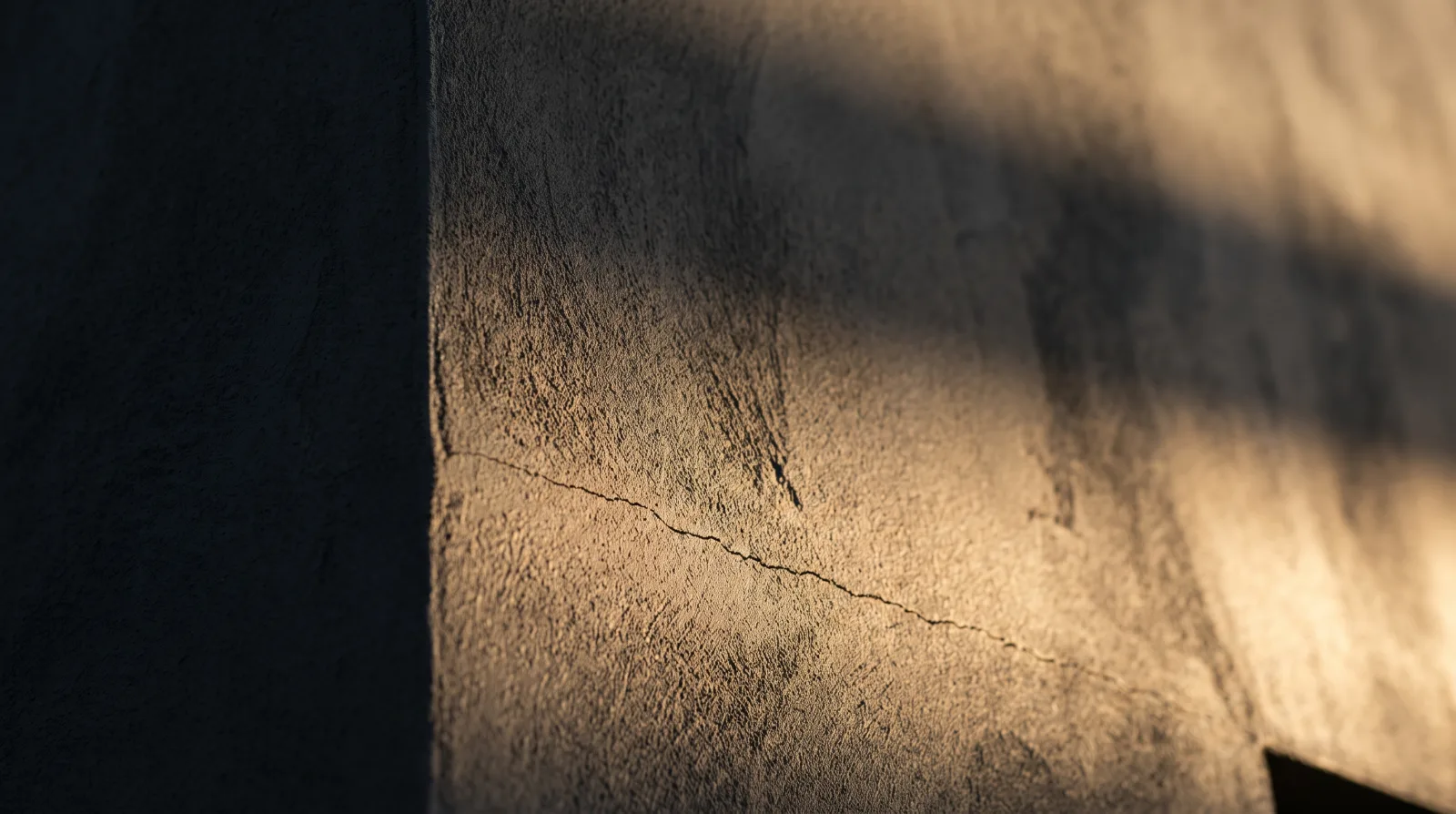
The difference between cosmetic cracks and structural damage
Not every crack in stucco means trouble. Fine, hairline surface cracks that follow a random "map" pattern are usually just the stucco settling and curing normally — cosmetic, not structural. What matters is whether water can get behind the surface through that crack. A crack you can slide a fingernail into, or one that runs in a straight diagonal line from a window or door corner, is a different story — that's often a sign of movement in the structure underneath, not just surface shrinkage.
Five signs your stucco needs attention
- Cracks wider than a hairline, especially near windows, doors, or corners
- Dark staining that doesn't wash off, usually a sign water is tracking behind the surface
- Bubbling or blistering texture
- Sections that sound hollow or "drummy" when tapped
- Crumbling or soft spots at the base of walls or around trim
Why small cracks turn into big repairs
Stucco's job is to shed water away from the structure underneath. Once water finds a way behind it — through even a small crack — it can sit there for months before you see any visible sign on the surface. By the time staining or bubbling shows up, there's often already damage to the sheathing or framing behind it. That's the difference between a repair that takes a day and one that takes weeks.
Patch repair vs. full re-stucco — how we decide
If the damage is localized and the underlying wall is sound, a patch repair — matching both texture and color — is usually the right call. Full re-stucco makes sense when damage is spread across multiple areas, when the existing stucco is significantly older and starting to fail broadly, or when what's underneath needs to be addressed first (see waterproofing, below). We check for the underlying cause before recommending which approach fits.
What to expect from a stucco repair
A proper repair starts with cutting out the damaged area cleanly, addressing whatever let water in to begin with, then rebuilding the stucco in layers to match the existing texture and finish. Color and texture matching is the step that separates a repair that blends in from one that stands out — it's worth doing carefully.
FAQ
Can I patch stucco myself?
Small cosmetic hairline cracks, sometimes. Anything wider, stained, or hollow-sounding is worth having assessed first — patching over trapped moisture just hides the problem temporarily.
How long does stucco repair take?
A localized patch is often a one- to two-day job. Larger sections or full re-stucco take longer depending on square footage and drying time between coats.
Does stucco repair need to match my existing texture?
Yes — texture and color matching is a core part of a repair actually looking finished rather than looking patched.
Seeing cracks, staining, or hollow spots on your stucco?
Get a Free Quote